Chasing the Feed: How the Algorithm Is Quietly Rewriting What It Means to Be a Creator

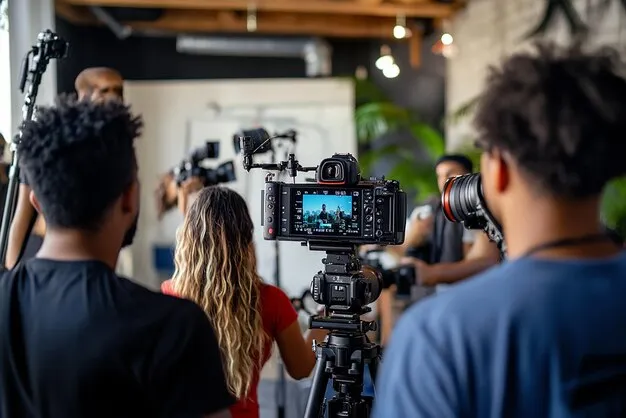
Photo by Photo by Videodeck .co on Unsplash on Unsplash
There's a moment a lot of creators describe that goes something like this: you spend three weeks on something you genuinely love — a short film, a deeply personal essay-style video, a carefully crafted comedy sketch — and it gets maybe 400 views. Then you spend forty-five minutes filming yourself reacting to a trending audio clip, and it hits 200,000 overnight.
At first, that gap feels like a fluke. After a while, it starts to feel like an instruction manual.
This is the quiet crisis playing out across entertainment right now. And it's not just affecting small-time creators grinding for followers — it's reshaping how professional artists, musicians, filmmakers, and writers think about their own work.
The Platform Is the Producer Now
For most of entertainment history, the gatekeepers were studios, labels, networks, and publishers. They had their own frustrating biases and blind spots, sure, but they were at least human. You could pitch them. You could make a case for your vision. You could, on a good day, convince someone that your weird little idea was worth backing.
Algorithms don't negotiate.
Platforms like TikTok, Instagram Reels, and YouTube have replaced many of those traditional gatekeepers with recommendation engines that reward specific behaviors — watch time, shares, saves, comment volume, replays. The content that performs best isn't necessarily the most thoughtful or original. It's often the most immediately stimulating, the most emotionally reactive, the most on-trend.
And creators — even seasoned ones — are adjusting accordingly.
Musicians are writing songs specifically structured to hook listeners in the first three seconds because that's when TikTok decides whether to push the audio. Filmmakers are reframing full-length projects into 60-second vertical clips before the project even enters post-production. Writers are packaging nuanced arguments into listicle carousels because that's what the Instagram algorithm currently rewards.
None of this is inherently wrong. But it raises a real question: who's actually making the creative decisions here?
Two Paths, Two Very Different Outcomes
Let's look at what's actually happening on the ground, because the picture is more complicated than a simple "sell out or stay pure" narrative.
There are creators who leaned hard into algorithmic trends and found genuine success. Beauty and lifestyle creators who pivoted to reaction content, entertainment commentators who built massive audiences by covering trending drama, even indie musicians who cracked the algorithm by releasing stripped-down "for the TikTok" versions of their songs before the full release. For some of them, the visibility translated into real opportunity — record deals, brand partnerships, invitations to rooms they never would have accessed otherwise.
But there's a durability question. When your audience follows you because you consistently deliver what the algorithm is currently surfacing, what happens when the trend cycle moves on? Several creators who rode the "authentic storytelling" wave of 2020-2021 found their engagement collapse when the platform shifted its rewards toward faster, snappier content. The audience they'd built wasn't loyal to them — it was loyal to a format.
On the other side, you have creators who've essentially opted out of chasing algorithmic favor and built slower, more intentional audiences. Filmmakers who release work on their own terms and use newsletters and Patreon to stay connected to viewers who actually care. Podcasters who refuse to chase trending topics and instead go deep on niche subjects, cultivating communities that are small but genuinely engaged. These paths are harder and often less financially immediate — but the creative autonomy tends to hold.
The Authenticity Paradox
Here's the uncomfortable part: "authenticity" has itself become an algorithmic trend.
Platforms figured out that audiences respond to rawness, vulnerability, and the appearance of unfiltered honesty. So now "authentic content" is a strategy. Creators perform realness. They film themselves crying, confessing, struggling — not necessarily because they want to share those moments, but because that content performs.
This isn't a judgment. The pressure to generate income from creative work is real, and if emotional transparency pays the bills, it's hard to argue against it. But it does mean that even the content that looks like it's resisting the algorithm is often still shaped by it.
The question isn't really authenticity versus inauthenticity anymore. It's about creative agency — about who gets to decide what you make and why.
How to Actually Hold Your Ground
If you're a creator trying to navigate this without losing your mind (or your artistic identity), here are some things worth thinking about:
Separate your platforms by purpose. A lot of creators who've maintained their integrity use algorithmic platforms as discovery tools — a place to reach new audiences — while directing people toward owned spaces like newsletters, websites, or community platforms where the relationship isn't mediated by a recommendation engine. This lets you play the game without letting the game define you.
Know your non-negotiables before you start making compromises. It's much easier to make strategic adjustments when you've already identified what you're not willing to change. If your visual style, your subject matter, or your format is core to who you are as a creator, name that explicitly. Then you can experiment around the edges without drifting from the center.
Treat metrics as data, not verdicts. A video that underperforms on one platform might resonate deeply on another, or in a different format, or six months later when the cultural conversation catches up to it. Low numbers aren't always a sign that you made the wrong thing — sometimes they just mean you made it for the wrong platform.
Build in protected creative time. Some of the most algorithmically successful creators maintain a practice of making things that will never be posted. Not everything needs to be content. Keeping a private creative life isn't just good for your mental health — it keeps the muscle of making-for-yourself strong, so you don't forget what that feels like.
The Bigger Picture
This isn't just a personal dilemma for individual creators. It's a cultural one. When entertainment platforms systematically reward certain types of content, they shape what stories get told, whose voices get amplified, and what kinds of artistic risk feel viable.
The algorithm doesn't have a vendetta against craft. It just doesn't care about it. And that indifference, at scale, has consequences that go well beyond any single creator's follower count.
The good news is that audiences still respond to quality, depth, and genuine creative vision — it just often takes longer for that response to build. The creators who figure out how to stay in the game long enough for that to happen are the ones who tend to build something worth keeping.
The feed moves fast. Your creative identity doesn't have to.