Shut Up and Win: Why the Most Powerful Thing You Can Do Online Is Post Less

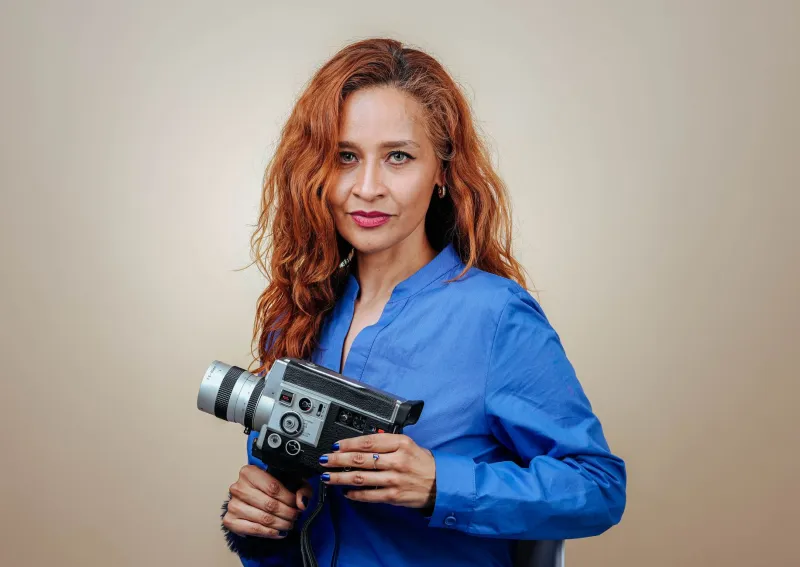
There's a producer in Los Angeles who hasn't posted on Instagram in four months. No Stories, no Reels, no cryptic captions about "exciting things coming soon." Her DMs, though? Packed. Her inbox? Full of pitch requests. Her reputation? Somehow more magnetic than it was when she was posting three times a week.
She's not a social media cautionary tale. She's a case study in restraint.
In an industry that has spent the last decade screaming at every creative to build their brand, grow their following, and stay visible at all costs, a quiet but growing counter-movement is taking shape. Entertainment professionals — writers, directors, actors, producers, music executives — are starting to realize that what you don't share might be just as strategic, maybe even more so, than what you do.
The Oversharing Trap Nobody Talks About
Here's the thing about constant visibility: it has a ceiling. When you post everything — every project update, every set photo, every "grateful for this journey" caption — you give people the full picture before they've had a chance to get curious about you. You've answered questions nobody got to ask yet.
Mystique used to be a byproduct of access. The reason old-school Hollywood stars felt larger than life was partly because fans genuinely didn't know what they had for breakfast or which gym they used on Tuesday mornings. Now, of course, that kind of total opacity isn't realistic — and it's not what strategic silence is really about.
What it is about is understanding that your narrative is a resource. And like any resource, you can deplete it by spending recklessly.
A screenwriter who's been staffed on three network shows told me she stopped sharing script ideas in industry Slack groups after watching a concept she'd casually mentioned resurface — slightly reworked — in a pitch she wasn't invited to. "I used to think sharing freely made me look generous and collaborative," she said. "Now I understand the difference between being open and being careless."
What You Protect, You Get to Own
There's a legal dimension here that entertainment professionals often overlook until it's too late. Ideas, before they're formally protected, are vulnerable. Sharing the arc of your pilot in a casual coffee meeting, posting a mood board for your documentary concept on a public Pinterest, or even describing a character in a Twitter thread might feel harmless — but in a competitive industry, that kind of casual disclosure can cost you.
Beyond intellectual property, there's the question of narrative ownership. When you share every step of your creative process publicly, you're essentially handing editorial control of your story to the audience. They get to define what your work means before you've had a chance to finish making it.
Directors who've worked on prestige television projects often talk about this — the anxiety of public expectation that builds when you've been too forthcoming about a project in pre-production. You walk onto set already managing the audience's version of the thing instead of the thing itself.
Selective sharing protects your creative process from outside noise, including the well-meaning but ultimately distracting noise of early enthusiasm.
Silence as Brand Architecture
Let's talk about the mystique piece, because it's real and it's underrated.
When someone in your industry consistently withholds — not in a cold or inaccessible way, but in a measured, intentional way — they start to feel substantial. You sense that there's more going on beneath the surface than what's being offered. That feeling is compelling. It pulls people toward you rather than requiring you to constantly push content at them.
Think about the entertainment figures who maintain that quality. They show up at the right moments, say something specific and considered, and then step back. They're not chasing the algorithm. They're not performing transparency. And somehow, they're the ones people want to be in a room with.
A music industry executive who manages several high-profile artists described it this way: "The artists who are the most in-demand are the ones who make you feel like getting access to them is a privilege. That's not arrogance — it's architecture. They've built their public presence so that there's always something you haven't seen yet."
The Practical Playbook for Saying Less
So what does this actually look like in practice? Because "post less" is easy advice to give and genuinely hard to execute when you've built habits around constant content creation.
Start with your ideas. Before you share a creative concept — in a meeting, in a group chat, on social media — ask yourself whether the upside of sharing it now outweighs the risk of losing ownership of it, even loosely. If the answer isn't a clear yes, wait.
With your social media presence, think in terms of chapters rather than daily updates. Instead of documenting every step of a project, consider what the reveal moment looks like. What's the version of this story that lands with impact because it's complete, rather than the version that loses momentum because you've been trickling it out for six months?
In professional settings, practice the discipline of not filling silence. A lot of oversharing happens not because people want to share, but because they're uncomfortable with pauses. Learning to sit in a meeting without volunteering everything you know is a skill — and it's one that tends to make people take you more seriously.
And finally, audit your audience. Not every contact in your professional network needs the same level of access to your thinking. The colleague you've known for a decade and the person you met at a mixer last month shouldn't be receiving the same information. Compartmentalizing isn't cold — it's smart.
The Quiet Ones Are Watching
There's a certain irony in writing an article about strategic silence and publishing it on the internet. But the point isn't to disappear — it's to be deliberate.
The entertainment industry rewards people who understand how to manage attention, not just generate it. And right now, in a landscape where everyone is shouting, the people who know when to go quiet are the ones cutting through.
Your presence — what you share, what you protect, what you let people wonder about — is a form of storytelling. Treat it like one. The best stories aren't the ones that give everything away in the first act.