When Friendship Meets Business: The Hidden Costs of Collaborating With Your Crew
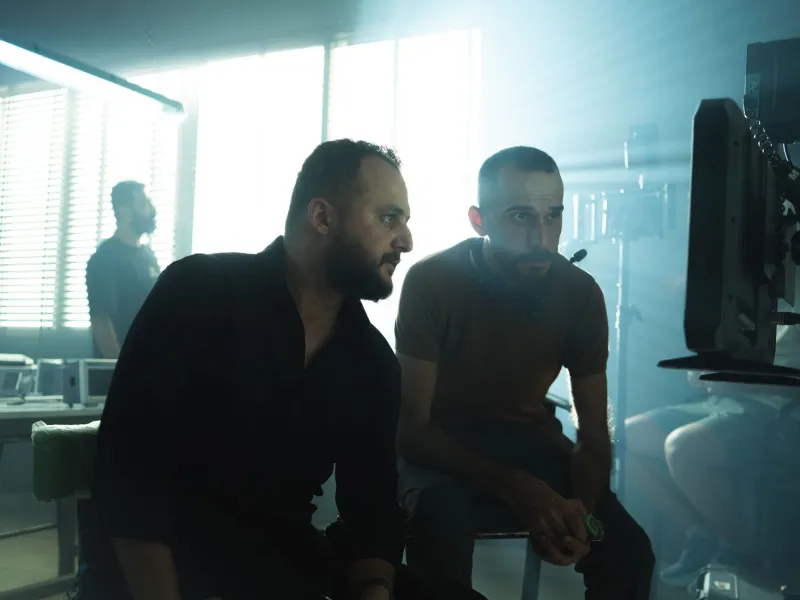
There's a version of this story that sounds incredible. Two friends, shared vision, late nights fueled by bad coffee and big dreams, and then — a project that changes everything. Hollywood loves this narrative. Audiences love it even more. The problem is that the version nobody films is what happens six months in, when the money gets weird, the credit gets unequal, and suddenly you're not sure if the person sitting across from you is your collaborator or your competition.
Friendship-based creative partnerships implode constantly in entertainment. Not occasionally. Constantly. And yet people keep walking into them with the same starry-eyed confidence, convinced that shared history and mutual trust are enough to hold a professional relationship together. They're not. They never were.
Why Shared Passion Is Not a Business Plan
Let's start with the most seductive lie in the creative world: that caring deeply about the same thing is a foundation. It isn't. It's a starting point, and a fragile one at that.
Passion is what gets you in the room. It does not tell you who owns the IP if things fall apart. It doesn't clarify who gets final cut. It won't resolve the argument about whether to take the network deal or hold out for a streaming offer. Passion is emotional fuel, and like all fuel, it burns out — especially when it's powering something that was never properly engineered to begin with.
The entertainment industry is full of cautionary tales about this. Think about the number of comedy duos who built massive audiences together and then fractured publicly over creative control. Or the producer-director friendships that dissolved the moment one person's name started appearing above the other's on the poster. The specifics vary. The root cause almost never does: nobody defined the terms before the stakes got real.
The Roles Problem Nobody Talks About
Here's something that doesn't get enough attention: friends are notoriously bad at assigning each other clearly defined roles, because doing so feels like a power move. Telling your best friend "you handle social and I'll handle production" sounds clinical when you're used to just figuring things out together. So instead, everyone does a little of everything, accountability gets murky, and resentment builds in the gaps.
Successful creative partnerships — the ones that actually last — treat role definition like a non-negotiable. Not as a way to diminish anyone's contribution, but as a way to protect the relationship from the ambiguity that kills it. When Shonda Rhimes built Shondaland, she wasn't winging the org chart because she liked the people around her. Structure was the thing that allowed the creative chaos to function.
If you're going into a project with a friend, sit down before a single email goes out and answer these questions out loud: Who has final say on creative decisions? Who manages the money? Who is the external face of the project? What happens if one person wants to walk away? Uncomfortable? Absolutely. Necessary? Without question.
The Contract Conversation That Feels Like an Insult
Asking your friend to sign something feels like you're saying you don't trust them. That's the mental block most people can't get past. But here's the reframe that actually works: a contract isn't proof of distrust. It's proof that you respect the work enough — and each other enough — to be clear about expectations before emotions are running high.
Entertainment attorneys will tell you that the friendships most likely to survive a professional collaboration are the ones where both parties lawyered up early. Not because they anticipated betrayal, but because they removed the ambiguity that causes betrayal to feel like the only option.
At minimum, any creative partnership agreement should cover ownership splits, decision-making authority, revenue distribution, and dissolution terms. That last one is the one everyone skips, and it's the one that turns a business disagreement into a years-long personal war. Know how you're getting out before you've fully gotten in.
When It's Already Going Sideways
Maybe you're reading this a little too late. The project is already underway, the lines are already blurry, and things are starting to feel tense in ways that are hard to name. Here's what not to do: avoid the conversation and hope momentum carries you through. It won't.
The most practical thing you can do mid-collaboration is call a structured check-in that's explicitly about the work, not the friendship. Separate those two things consciously and verbally. "I want to talk about the project" is a different conversation than "I want to talk about us," and conflating them is how a professional disagreement becomes a personal wound.
Bring in a third party if necessary. A producer, a manager, even a respected mutual colleague — someone who can hold the space for a frank conversation without the emotional weight that comes with years of shared history. This isn't weakness. This is what professionals do.
The Duos That Actually Make It
It would be dishonest to pretend that all friend-based creative partnerships are doomed. Some of the most enduring collaborations in entertainment started as genuine friendships. But if you look closely at the ones that survived, a pattern emerges: the people involved were ruthlessly honest with each other, they built structures that separated personal feelings from professional decisions, and they gave each other room to have different ambitions without treating divergence as betrayal.
They also, without exception, had the hard conversations early. Not because they wanted to, but because they understood that the friendship was worth protecting — and that protecting it meant not letting the business quietly destroy it from the inside.
The Real Question
Before you greenlight a project with your best friend, ask yourself one honest question: if this collaboration ended badly, could your friendship survive it? If the answer is no — or even maybe not — that tells you something important. Not necessarily that you shouldn't do it, but that you owe both the work and the relationship a level of intentionality that most people skip.
The romantic version of the story is two friends building an empire together. The realistic version is two people who cared enough about each other to treat the whole thing like a business from day one. Turns out, that's the version with the better ending.