The People Who Had Nothing to Give You Will Be the Ones Who Change Everything
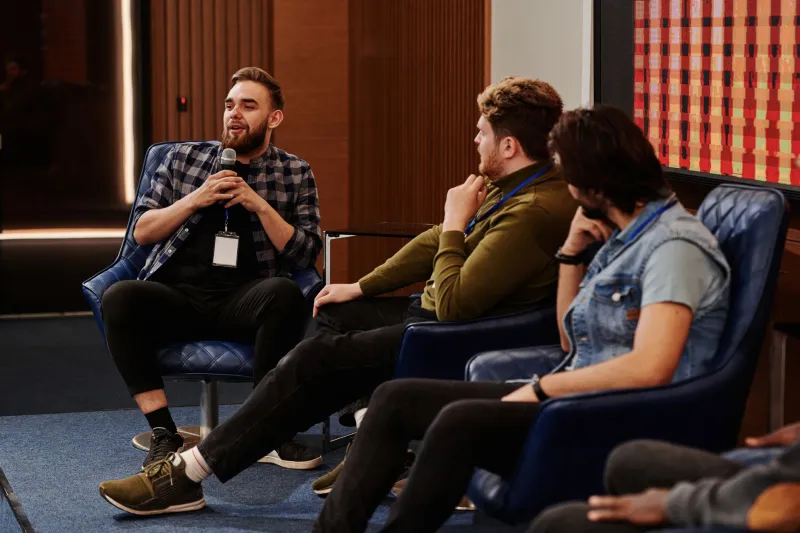
Let's be honest about how most people approach networking in this industry. You walk into a room—whether it's a premiere, a panel, a Zoom happy hour that nobody really wanted to attend—and your eyes do a quiet scan. Who's worth talking to? Who has credits? Who has pull? It's almost involuntary at this point. The entertainment world trains you to think that way.
But here's the thing nobody puts in the career advice columns: the person who ends up going to bat for you five years from now is probably someone you met when they were broke, uncredited, and figuring it out just like you were.
Transactional Networking Has a Shelf Life
Transactional networking works—right up until it doesn't. You trade cards, you follow up, you grab coffee with someone who has a showrunner credit and hope something sticks. Sometimes it does. But the relationships built on mutual utility have a quiet expiration date. The moment your leverage shifts or theirs does, the dynamic changes. It's not cynical to say that; it's just honest.
What doesn't expire is the memory of who showed up for someone when there was nothing in it for them.
Think about the early days of careers like Issa Rae's. Before Insecure became the cultural moment it was, she was grinding on YouTube with a scrappy web series. The people who helped her then—writers, directors, crew members hustling for their own shot—weren't doing it because she was powerful. She wasn't yet. They did it because they believed in the work, or in her, or just because it felt right. And when things took off, those relationships didn't dissolve into awkward professional distance. They deepened. The people who built something with her before the spotlight arrived became collaborators in a very different sense of the word.
That's not an accident. That's how trust actually gets built.
Why Low-Stakes Relationships Hit Different
There's a psychological reason that relationships formed without power dynamics tend to be more durable. When neither person has anything obvious to gain, what you're left with is just—people. Their actual personality, their real work ethic, the way they treat a PA on a bad day. You see each other clearly in a way that's almost impossible when one person is already established and the other is clearly angling for something.
Those early-career connections also tend to survive longer because they're not fragile in the way transactional ones are. Nobody's keeping score. You helped someone with their short film not because you expected a producing credit down the line, but because you had the weekend free and you liked what they were making. That kind of generosity doesn't get forgotten. Not in this industry, not in any industry.
The entertainment world is also, despite its size, genuinely small. People rise. The assistant you were kind to at CAA in 2019 might be the one reading your pitch deck in 2025. The director who was sleeping on a friend's couch during Sundance is now fielding studio calls. Careers are long, trajectories are unpredictable, and the people who started at the bottom with you are often the ones who end up moving in the same circles for decades.
Mentorship That Flows Both Ways
Here's another piece of this that doesn't get talked about enough: mentorship isn't always top-down, and it doesn't always look like mentorship when it's happening.
Some of the most formative professional relationships are peer mentorships—two people at roughly the same level who push each other, challenge each other's thinking, and refuse to let each other settle. There's no hierarchy to navigate, no performance anxiety about impressing someone above you. You can just be honest. That kind of relationship produces better work and, often, better people.
And sometimes the mentorship flows upward in ways that surprise everyone. A younger writer who challenges a more established one to think differently about structure. A first-time director who brings a fresh perspective that reshapes how a veteran approaches the craft. The 'value' of a professional relationship has never been as one-directional as the traditional networking playbook suggests.
Redefining What 'Worth' Even Means
The real shift here is about how you measure the worth of a connection in the first place. If the only metric is what someone can do for you right now, you're going to miss a lot. You're going to blow past the person who's about to have a breakout year. You're going to be too busy working the room to have the real conversation happening in the corner.
Worth, in a professional context, is a long game. It's reputation. It's the story people tell about you when you're not in the room. And in creative industries especially, people remember the ones who were generous before they had to be.
So the next time you're at an industry event, or scrolling through LinkedIn wondering who to connect with, try shifting the question. Instead of what can this person do for me, try what is this person actually doing, and do I find it interesting? That's a different kind of conversation starter. It leads to different kinds of relationships.
The Unsexy Truth About Building a Career
Nobody wants to hear that the key to a strong industry network is just being a decent person with a genuine curiosity about other people's work. It doesn't make for a very compelling masterclass. But it's true, and most people who've had long careers in entertainment will tell you the same thing when they're being real about it.
The connections that end up mattering aren't always the ones you strategized your way into. They're the ones that formed naturally, in the margins of your career, when you were just being yourself and helping where you could.
That's not networking. That's just how trust works.